

Hermann Hesse has attempted to turn into fiction a portion of the Eastern paths to wisdom he has studied. The truth or vision of life that an author wishes to convey must emerge, as a distilled essence, from the events narrated in a novel. With characters constructed around the simple, preliminary practices within Hesse’s understanding, and with its superficial events, this novel remains an attempt to give human form to the preconceptions he brought to his philosophical quest. Yet the insights into truth and life conveyed in Siddharthan, and their elucidation, are profound. At the same time, in laying bare the depths of the inner struggles and confusions of those who sincerely attempt to travel that path, it may be called an outstanding effort.
Taking the attainment of enlightenment as its centre, the novel explores the changes it brings about in a person’s life, or the dimensions that a person’s life and being assume after enlightenment. These dimensions differ from one person to another, according to their individual qualities, methods of practice, and what they have learnt and understood through experience. What is extolled here is not the exclusion of this life from the path to wisdom, but the act of plunging into it to gather pearls.
Neither the title Siddharthan nor the encounter and conversations with Gautama Buddha in the story warrant treating this as an entirely Buddhist novel. Siddharthan, a Samana whose outlook is inherently oriented towards Advaita’s vision of wisdom, meets the Buddha on his journey. In other words, the narrative connects three points: Samana ascetic practices, Advaita philosophy, and Buddhist teachings. He bows to the Buddha as the noblest and wisest of all those he has met, and goes his way. To the very end, he holds the Buddha in boundless esteem and affection. Yet, beyond Buddhism, it is Advaita that receives extensive treatment in the story. From one perspective, it is Advaita, rather than Buddhism, that forms the novel’s underlying note. ‘This is a stone. In the course of time, it may become earth, a plant, an animal, a human being. I do not value it because it is one thing that develops into another. I love it dearly because it appears simply as a stone,’ he says.
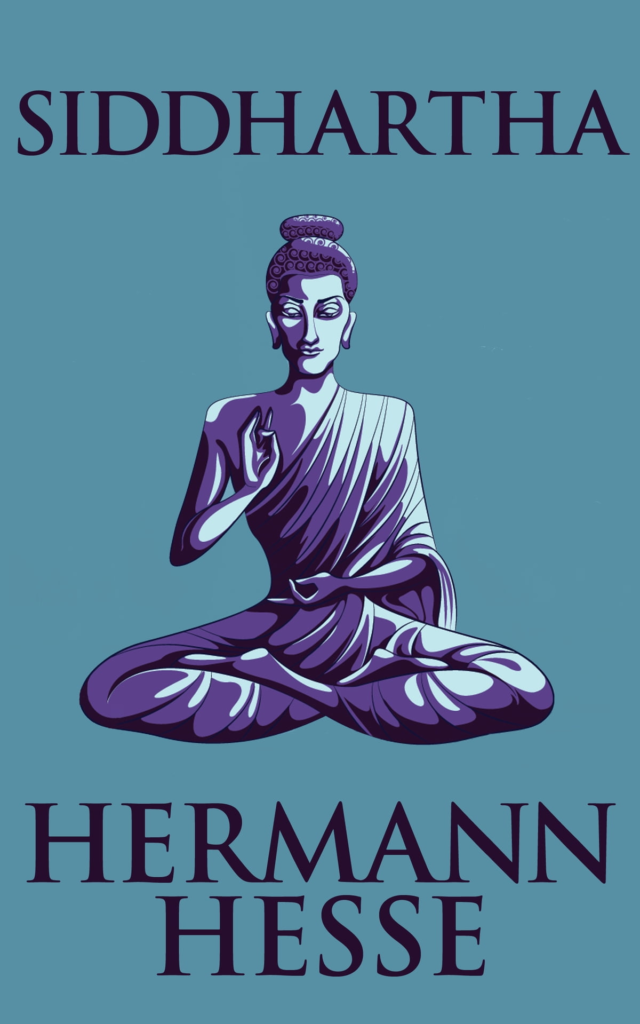
‘Though he has practised thousands upon thousands of times, following the path of self-annihilation, settling into nothingness, wandering in the void, freed from self-awareness, returning again and again to what he has relinquished becomes an incurable habit. His life stretches on in a cycle of begging for alms, conquering desire, and then longing once more.’ With this understanding, Siddharthan moves towards a different path of his own. For Siddharthan the Samana, the discoveries of the Buddhist path are not enough. For he has directly experienced the dual nature of this life, and the truths arising from that experience fill his mind. He realises that what suits him is not renunciation merely as a matter of principle, but renunciation that comes through knowing, feeling, and experiencing, through a natural release.
The lives of the wise run counter to the fanciful expectation that, once they attain the enlightenment that awakens them to the truth of existence, their being and outlook will remain unsullied. Even after awakening, there will still be laundry to do. We cannot say that the Buddha, who attained enlightenment one night after six and a half years of ascetic practice, lived in that same state of exalted vision until the age of eighty. Awakening is a great change, in character and outlook. But it is in meeting the surges of life that confront one in the days to come that wisdom reveals itself. It matures and grows firm. Even after ecstasy, the laundry must be done; it is this that cultivates the heart and allows wisdom to spread its fragrance, says the Buddhist meditation teacher Jack Kornfield in his book ‘After the Ecstasy, the Laundry: How the Heart Grows Wise’.
From a very young age, Siddharthan trains as a Samana alongside his friend Govindan. Sitting upright, controlling his breath and entering kumbhaka, slowing his heartbeat and effacing the ‘I’, he learns to abide in samadhi in the Samana manner. He practises with such proficiency that even the Samana teachers are astonished.
‘You will become a great Samana,’ says Govindan. Siddharthan questions this, startling him with his reply: ‘I don’t think so. What I have learnt from the Samanas could also be learnt from prostitutes, carters, and gamblers.’ When Govindan asks, ‘How can one learn from such lowly people?’ Siddharthan explains. ‘Fasting, holding one’s breath, forgetting the body, and flying free of the self—these are merely stratagems. Meditative practice is nothing but self-forgetting and self-deception,’ he says, alarming him further. ‘A carter or a labourer worn out by physical toil achieves the same self-forgetting by drinking toddy and revelling in intoxication,’ comes his answer. Twenty years ago, my friend Kamaraj asked, ‘Isn’t the ecstasy experienced through drugs enough? Isn’t the ecstasy of meditative practice of the same kind? That euphoria is fulfilling, after all.’ There is no need to point out here that the aim of meditative practice is not to abolish life’s natural ecstasies and pleasures, but to dispel its sorrows and its enslavements.
Siddharthan’s soul pierces Brahman like an arrow and lodges there: such is the description of his meditative prowess. Having mastered deep meditative practice, he leaves the monasteries where he has lived and sets out with his friend on an independent quest. Along the way, he comes to the Buddha. Captivated by him, Govindan alone becomes a Buddhist bhikkhu, while Siddharthan the Samana converses with the Buddha. Where else can anyone find the Atman, he asks, except by abiding in the eternity within oneself, in one’s inner awareness? Where does this inner awareness of the self reside? Siddharthan the Samana asks. One must discover and attain the source of one’s own existence; the error lies in failing to understand that nothing is to be sought outside oneself. This, he says, has been Siddharthan’s longing and sorrow.
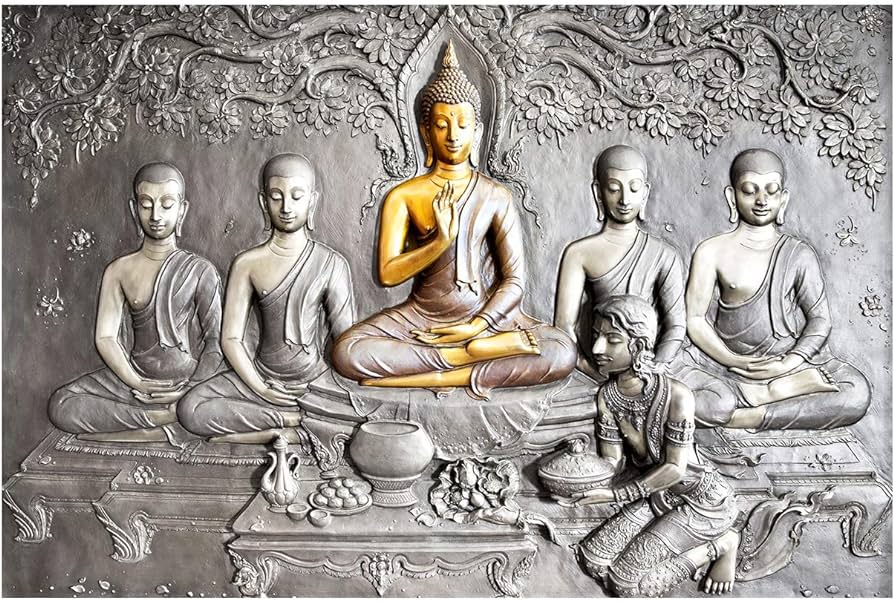
He is tormented by thirst. What he has sought to discover is not in the teachings. There is something that cannot be conveyed in this way, he tells the Buddha. Believing that renouncing the world and travelling with him would itself become an identity, he takes leave of the Buddha and departs without joining the Sangha.
Yet after meeting and conversing with the Buddha, he becomes a new man. He feels that everything has been born anew. He awakens before the truth of existence. The visions of Advaita that had until then remained an understanding on the plane of his intellect are overturned. An inward awakening occurs.
He knows rivers as rivers and mountains as mountains. What has changed after his conversation with the Buddha? Nothing, really. But he has come to know that nothing. And so he realizes that there is no longer anything to seek. This, too, is a narrative often told as a kind of Zen wisdom! He is freed of seeking. Within that freedom, he opens into a fresh awareness. Yet in that awakening he is, at last, shaken to his foundations. Govindan, who had travelled with him, has become a bhikkhu in the Buddhist Sangha: the Buddha has taken his friend away from him, he feels, but has left something greater within him. It is rare and wondrous; he rejoices that it has given him back to himself. ‘Samana, clever as you are, take care that your cleverness does not go too far,’ says the Buddha, sending him on his way with contentment. Alone, he continues his quest.
He resolves henceforth to be his own pupil. The meaning and truth of each thing lie within it, not outside it as some hidden significance. Colours, forms, others, himself—he comes to know them all as interdependent qualities that arise and pass away. He feels that he has evolved into a complete human being.
Though he recognizes the Buddha as the rarest of all the sages and teachers he has encountered, he realizes that no one else can find in his teachings the great truths the Buddha himself has experienced. He understands that all this time he has needlessly been fleeing himself in fear. He discovers that his outward flight was the very reason he could not understand himself. With clear intent, he turns his attention inward. Having left the Buddha, he wanders as an enlightened man who has fashioned himself independently. He travels the path of truth beyond teachings, meditative practices, and conceptual frameworks. He continues, believing it best to withdraw from outward preoccupations, heed the one inner voice, and follow its way.
On the way, he spends a night in a ferryman’s hut. In his dream that night, Govindan weeps, asking, ‘Why did you leave me?’ When he embraces him in comfort, the figure becomes a woman’s body; as he savours it, it reveals to him the sublime taste of life’s natural vitality. He wakes and crosses the river with the help of Vasudevan, the ferryman. Pointing to the cycle of water, Vasudevan says that what he has learnt from the river is that ‘everything returns’, and bids him farewell. In everyone he sees, Siddharthan senses Govindan’s companionship, his overflowing gratitude. This perspective draws him still closer to the world.
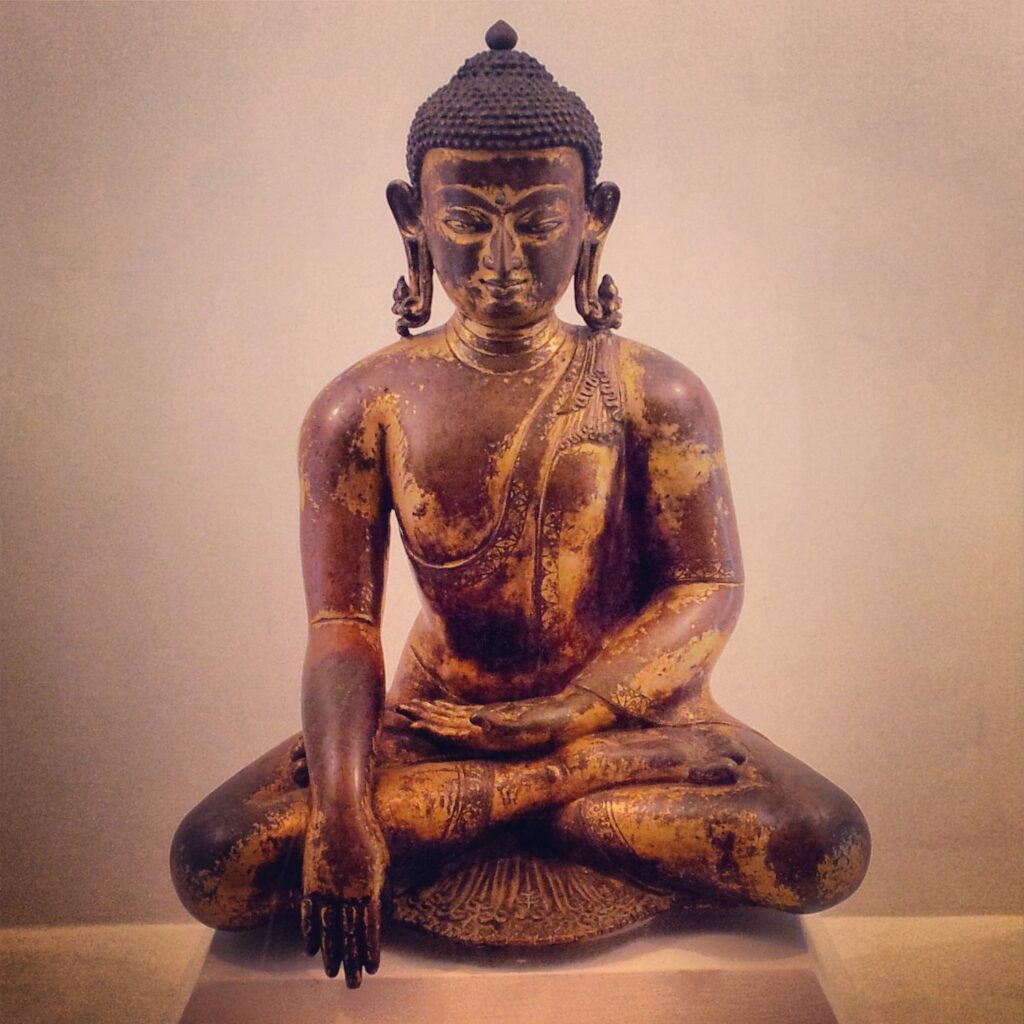
He delights in an intimate relationship with Kamala, a courtesan he meets by chance. Siddharthan the Samana, accomplished in meditation, unites with Kamala, accomplished in the art of love. ‘Having studied and mastered love as an art, you cannot truly love anyone,’ the Samana tells her. This remark may also be understood to mean that Siddharthan, accomplished in awakening through meditation, cannot in truth live on worldly terms. Yet, after his awakening, he becomes a man who loves with joy everything he sees. Believing that his inability to love anything or anyone was the reason he had once languished so, he surrenders himself fiercely, recklessly, to samsara, to worldly life. He believes that, to recover from his despair, he must experience life within this ocean of samsara. Thinking that he must become a fool once more in order to behold the Atman dwelling within him, he immerses himself in worldly pursuits. He must sin in order to come alive again. This senseless path, he thinks, goes on winding round and round. Yet, in his deepest self, he had not forgotten the great bliss that had come to dwell in him. At a particular moment, it rises as an intuition, as the pranava mantra, and lights him from within.
To earn the wealth Kamala demands as the price of the pleasure of her company, and also to make his own living, since he feels that it is not right to beg after abandoning renunciation, he enters the service of a merchant named Kamaswami, learns the trade, and becomes a prominent wealthy man himself. Stories told in Swami Vivekananda’s books on Vedanta come to mind. An enlightened sage lives alone on a mountaintop, and a pregnant cat comes in search of him. Moved by compassion and love for the cat, he tries to feed it milk, and a milch cow is brought for this purpose. Then a woman arrives to tend the cow. In the end, a child is born to the sage and the woman. This is a story most people know. Little by little, Siddharthan the Samana becomes like him. Without knowing it, he becomes the father of a son. When Kamala dies, he raises the boy. Pampered and brought up to do as he pleases, the son leaves his father in hatred, and Siddharthan grieves. Once again, he attains wisdom.
What is suggested here is that Siddharthan, who in the sense of liberation following his awakening stands apart from everything else, is by nature drawn to forming bonds with other people. This pushes him into samsara. Even in his awakened state, he plunges into that ocean. He struggles. He forgets his meditative practice. At first, Siddharthan was tightly bound to samsara. He savoured it until he was sated, and grieved when it drained away. At one point, Kamala alone was everything to him. He leaves her too, only to meet her again on her deathbed. Another Vedantic story is much like this: a god comes to earth on an errand and happens to become a pig among a herd of pigs. At a certain point, he forgets himself entirely, believing the sewer he lives in to be heaven. The other gods seek him out and remind him of his divine nature, and he becomes a god once more.
‘Most people become dry leaves, tossed about by the wind, rustling and then falling. A few others are like stars speeding along their appointed courses, carrying their own understanding and light within them, beyond the wind’s reach. Among the many wise men I have known, there is one whose completeness in this regard I cannot deny. He is the teacher of this path, Gautama. Every day, thousands listen to his teachings and follow his way hour after hour. Yet they are all fallen leaves. They have not found wisdom and understanding within themselves,’ says Siddharthan the Samana. For life, to him, comes to mean not teachings but immersion in this existence, here; and wisdom is the awakening that comes through realizing its truth in experience.
I know meditation teachers abroad. Most took up the monastic life in the seventies at Buddhist monasteries in South Asia and, after 2000, began running meditation centres in their own countries, distinguishing themselves as seasoned Buddhist bhikkhus. Some have died. Of those who matured in this way, some continue to live as bhikkhus; others have left the monastic life, married fellow monastics, and continue to practise meditation and guide others. Still others, while remaining in monastic robes, have gone astray in pursuit of sex. Some of them are extraordinary teachers and guides. Yet they have strayed. Even so, no one who has studied and experienced their teachings can deny the excellence of their talks and books.
However much we speak of awakening, ecstasy, liberation, and enlightenment, sexual desire and parental attachment continue to seethe, unquelled, in the primordial depths of life: the novel intimates this. Wealth and fame are external. Sexual desire and the urge to have children are inward, biologically rooted impulses. For one who becomes a renunciant very young, never having known these experiences, the deprivation, the longing, and the sorrow are profound. Only after he has had these experiences does Siddharthan the Samana attain enlightenment again. He grieves over the separation from his son, who has left him in hatred and vanished without a trace. Here we might recall the Buddha: on one side, the sorrow of Suddhodana, who languished in separation from him, of Yashodhara, left in solitude, and of Rahula, who entered the monastic life in childhood; on the other, royal renown, wealth, domestic pleasures, and fatherhood. It is as one who has experienced this worldly life that the Buddha leaves home and attains enlightenment. It seems to me that this is precisely why Siddharthan the Samana feels such reverence and love for him; for this, too, is his own premise!
Then Siddharthan meets Vasudevan, the ferryman who takes people across the river to the farther shore, and stays with him. They had met when Siddharthan was a Samana ascetic. Meeting again in old age, they develop a deep friendship. Vasudevan is not an ascetic. Nor is he a sage. He is an ordinary ferryman, widowed and alone. He lives in the everyday. That is, simply in the present moment. He lives with the river. Through the river, he comes to an experiential understanding of the sublimity of existence. That river is his teacher. In the river’s ceaseless flowing and standing still, Advaita stands exalted. Vasudevan has learned through the river’s flow, through the natural course of existence, and grown into a natural sage; Siddharthan regards him as another Buddha.
*
At home, too, I am asked, ‘What more do you need to know? What are you still running after?’ Some ask, since you are immersed in meditative practice, do you still feel anger, do you yearn, does lust stir in you, can illness touch you? My one answer to them all is, ‘Yes, I do.’ These remain until I fall at the brink of death. My task now is no longer to strive, but to practise. Not to grapple and wrestle with the attachments that arise, but simply to perceive them and remain. To keep practising, to immerse myself in selflessness, in the absence of self, to abide in the transient, to embrace nonbeing and sleep: that is all. Everything experienced and perceived with wakeful awareness in the present moment becomes knowledge, and this life then comes to stand atop the mountain of wisdom. Yet the question arises: ‘And after that…?’
The Zen monk Thich Nhat Hanh played a major role in popularizing the concept of Engaged Buddhism throughout the world. What does ‘engaged’ mean? We might call it social engagement directed towards the common good. Such social work is already being done all over the world, so what is new about this, one is inclined to ask. It is a kind of selfless feeling. It arises from an absence of self. The novel intimates this.
Siddharthan the Samana had understood the Buddha. He greatly admires and respects his work with the Sangha. Yet he leaves him, plunges alone into worldly life, emerges from it, and awakens once more. At that point, he has no personal purpose for living. But until life departs from this body, he wishes to engage in what brings him fulfilment. He reaches this conclusion: ‘Love alone is paramount in this world. To scrutinize the world, explain it, and then dismiss it may be important to great thinkers. But I believe that loving this world is all that matters. Rather than rejecting it or hating one another, we can cherish, honour, and respect the world, ourselves, and all living beings with love.’ Accordingly, after Vasudevan leaves, Siddharthan becomes a ferryman and lives very simply, taking people back and forth across the river. While working as a ferryman, he meets Govindan, now a seasoned bhikkhu. Govindan has not yet reached even the threshold of awakening. Siddharthan brings him, in his despair and sorrow, to the shore of enlightenment. In a sense, Govindan may be said to resemble the Buddha’s Ananda.
Siddharthan comes to realize that samsara and nirvana are not two separate aspects: they are interwoven, each brimming within the other. At their second meeting, as they were about to part, Vasudevan had said, ‘Love this river, stay beside it, learn from it.’ Following his advice, Siddharthan the Samana discovers one of the river’s secrets. It takes a firm hold of his soul. The river flows on and on. Yet it is always there. The river is always the same. Yet at every moment it is new. In that instant, the great truth of existence becomes profoundly clear to him.
Turning away from the path to wisdom through teachings as unnecessary, Siddharthan finds the path of life itself—the turning and returning within it—the one that appeals to him. His meditative outlook might also be understood as the ‘pathless way’ of which J. Krishnamurti speaks.
Yet inwardly he may have realized that it was the meditative training and experience of his youth that repeatedly brought him clarity, rescued and renewed him amid every whirlpool, and finally made him an enlightened man. Perhaps he then remembered what the Buddha had said as he took his final leave of him and walked away: ‘Do not be too clever.’ Ego is but a strand of cleverness.
In the end, Siddharthan, who turned away from the Buddha and gained clarity through suffering, appears as a Buddha in Govindan’s eyes. Through him, Govindan too experiences Buddhahood, without any teachings. Unlike Govindan, Vasudevan, without meditative practice or a quest for truth, naturally attains the qualities of a Buddha through the rises and falls of his simple life and his awakened awareness of the river’s flow, without being conscious of having attained them. Through the fruits of meditative practice, one may indeed savour the pleasures of this life without attachment. It is in this way that Siddharthan acts after his awakening. But even that clever way leads to a lack of fulfilment. It is not that the world is extraordinary and is slowly evolving along a long path towards completeness; he realizes that it is complete at every moment.