

Christmas festivities had been arranged for the inmates at a prison complex in Arizona, in the United States. Roxy, an Eelam Tamil prisoner involved in drug trafficking, had been brought to the prison that very day. At the officers’ command, he joined the queue for Christmas dinner. As he approached the table where various dishes were being served, the man ahead of him picked up a paper plate and handed it to him. Taking his fried rice with curry poured over it, Roxy followed the man. They squatted in a spot away from the other prisoners. Half-parched eyes, cheeks withered into hollows, thick lips. He said his name was Judo. Roxy asked him,
“What are you in for? How many years did you get?” Judo’s face grew calm. Roxy’s question did not anger him. Instead, after all these years, he felt in his heart a closeness to a fellow prisoner. He felt there was an affection binding them, beyond their crimes.
“Even the seven years you’ve been sentenced to wouldn’t be enough for me to tell you my whole story,” Judo said with a smile, and began.
2
It was a time when European invaders were devouring Australia piece by piece. Though the great city of Karamila at its northern tip resisted with all its might, it too fell to the invaders in the end. On a full-moon night, all the Indigenous people of Karamila were herded with hunting dogs to an outlying village. They were made to stand at gunpoint around wallaby grass that had been cut into bundles and set alight. Logan, a guide to the vast forest, stood in the middle of the crowd with his wife Barbara and their one-year-old son, his red eyes darting about in fear. Barbara gave their exhausted son water from a vessel made of palm spathe that she had brought with her. Faces showed in the firelight. The invaders could hear the terrified Indigenous people invoking their clan deity, Mimi, through their thick lips.
A tall man who looked like a white cobra even in the darkness came and stood before them all, holding a long sheet of paper.
“Black people of unmixed blood! It is a great ordeal even to make you out in this darkness. There is little to say. I shall be brief. You know full well that we have come here to cleanse this land of beasts and mould your future generations in our image. The filth clinging to you, with your forest lives and black skins, must at last be purged. Your coming generations have no need of it. With this holy proclamation before you, we begin our work, sworn to God. We are taking permanent charge of your children. Let them work on our farms from now on. Let them grow into white-skinned beings whom humanity will honour,” he finished reading.
Uniformed men climbed out of the vehicles, entered the crowd, and swiftly wrenched everyone’s children away. They carried them to a long vehicle covered with a green tarpaulin, waiting some distance away. When the mothers lunged to stop them, they were kicked to the ground. Some of the men tried furiously to snatch back their children and were felled with rifle butts. Others ran to the fire, scooped up burning embers, and hurled them at the invaders.
Barbara was crouched against the earth, clutching her child. Pulling her with him, Logan plunged into the forest and flew in the direction the darkness showed him. For months they hid and wandered through the forests, swallowing and digesting the long journey. By the time they reached the banks of the Kinchela River in New South Wales, all three had become unrecognisable. A white woman named Susanna gave Logan’s family refuge.
3
Susanna had come to Australia from England with her husband for his police posting. She was a keen hunter, and when she went into the forest in search of kangaroos, her husband died of a snakebite. Susanna lived alone in the Kinchela area. She warmly embraced Logan’s family, who had sought shelter near her house. Susanna herself named Logan and Barbara’s son.
With the child bound snugly to Barbara’s back in a cloth, the three of them would make long journeys into the forest by day. The deep forest’s lips, which Logan and Barbara revealed to her, unfolded within Susanna as many worlds. With her hunting rifle, she roamed in the footsteps of Logan, who knew more trees than people. It was in the forest that the little boy first learnt to walk. Holding his fingers, Barbara would sing—
“One snail, two snails,
The two looked at each other.
One snail, two snails,
The two went for a walk.
One snail, two snails,
The two talked a little.
One snail, two snails,
‘We share one home,’ they said.”
—in a child’s voice. Watching them joyfully celebrate even the smallest moments filled Susanna with delight. She bathed in the cool springs they came upon in the depths of the dark forest. She too grew deeply fond of raising the child amid nature.
The sounds of the newcomers wandering through the Kinchela forests travelled beyond the woods and reached many ears. The guns that snatched children from Indigenous parents arrived in Kinchela. Early one morning, before they could set out to hunt, military vehicles surrounded Susanna’s house.
The scorched smell of terror reached inside the house. Logan and Barbara picked up their son and dashed through the back garden. Three or four gunshots shook the early morning. Logan and Barbara crumpled to the ground. Their son stood up and looked at the sky. Then he looked at his mother lying on the ground. The first blood he had ever seen.
Susanna flung open the back door, ran out, and fell between the bodies, wailing. Logan, who had raced like lightning along every path of darkness, lay fallen, caught in the snare of light. At the sight of him, she sobbed aloud. His open eyes were still looking at Barbara. The sound of boots closed in. One man picked up the boy who remained. He writhed in the man’s grip and screamed. Susanna rose in fury and struck hard at the chests of the men standing there with guns.
“I’m a white woman too, aren’t I? Give me the boy. Please.”
“We have to train these people ourselves, Susanna. Like your husband, we’re only carrying out government orders. Don’t get in the way. Move aside,” an officer said.
As Susanna clung to the uniformed men’s legs and sobbed, they put the boy in the front of the jeep. The vehicle sped away.
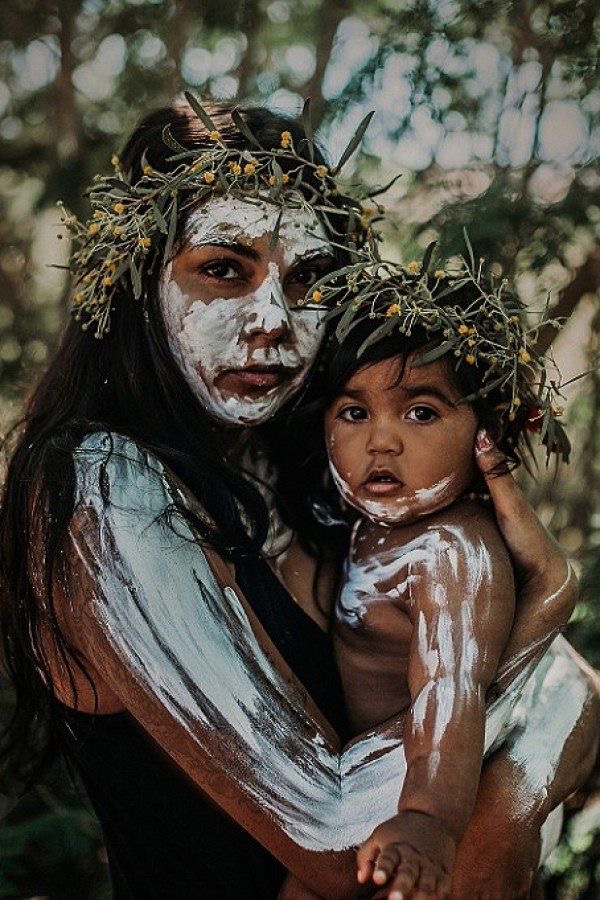
Susanna called his name, her cry shaking the forest—
“Judo…”
4
Judo was placed in a stockade where hundreds of Indigenous boys were confined. They stood in separate cages made of wooden poles, gazing out longingly. All their cheeks were sodden with tears. Vehicles entered the stockade, sorted the boys into grades, and carried them away. Policemen with long guns and round hats stood guard.
The police brought the taller boys out of the wooden cages and held a game within the compound. They made one boy stand in the open ground outside the stockade and told ten others to approach him in a line and punch him once each in the face. The boys who took all ten punches without flinching, bearing the pain, were sent to break rocks.
Mario, a heavily potbellied policeman guarding the stockade, took Judo away in his jeep when darkness fell that day. He led Judo up a ladder to his solitary house, built high between two trees. He ordered Judo to sit in a cane chair. Relief at having escaped the stockade showed in Judo’s eyes. Mario went into his room and brought out a red soft drink, poured it into a cup, and gave it to Judo. With a sweetness and coolness he had never tasted before, the drink sent a shiver down Judo’s throat. Mario savoured the satisfaction in Judo’s eyes. He looked into them and smiled. He stroked Judo’s cool lips. Then Mario stood up naked before him.
Inside that house too was a cage made of poles, like those in the stockade. Covered and bound with leafy branches, it was a dark hiding place. When Mario went out during the day, he pushed Judo into the cage and locked it. In the evenings he returned and gave Judo the soft drink. He stood up before him. Mario twisted Judo’s penis and delighted in his pleading eyes as he screamed.
One morning Mario did not get up. Judo rolled his body this way and that inside the dark cage, making noises, unable to understand anything. Two days later, he heard vehicles outside. The police carried away Mario’s body from the bed. Hearing Judo call out from within the cage, they opened it apprehensively and were shocked by what they saw. They struck him with a rifle butt and dragged him out. They shackled him and hoisted him into their jeep.
Judo witnessed Mario’s burial. The police left him with a man who worked in that burial ground, saying they would return later and move him elsewhere. Judo worked there burying bodies until he was eight. Not once did he think of crossing the burial ground’s fence. He kept the fruit and tubers given to him by the policemen who brought the bodies in a box in his palm-leaf hut, and ate them.
One day the wife of a senior police officer came to the burial ground to bury her husband. Judo was frightened by the sight of her. The white-skinned woman wore a long dress and gloves. That figure, unlike any he had seen before, troubled him. Standing beside the grave, Judo watched her alone. The sound of her sobbing flowed into his ears, a new sound he had never heard before.
The woman asked the policemen who the boy staring at her was.
Later, in memory of her husband, she brought Judo with her to America.
5
Olivia sent Judo to school with her two children. She believed his mind would surely change. She made him forget a good deal of his past. Judo slept and woke at regular hours. With the roots of his old memories severed by pills, he went to school and came home. Because Olivia’s love and care reached him only through pity, that love shattered him further as the years passed. Drugs redeemed his school life, lived with his head bowed. They answered the clamour within him. He walked with his head held high. Home became alien to him.
Frightened, Olivia moved to another city with her two children.
The police learnt that Judo, with no money for packets of drugs, was committing thefts in every direction. He rose to such notoriety on the streets of New York that a special squad was formed to hunt him down.
Judo became so adept at escaping whenever the police surrounded him that he wore every street in the city on the tips of his toes. The nightclub “Snails” on the outskirts sheltered the now powerfully built Judo by night, serving his many needs. Frequented by older women, the club reeled with intoxication on weekends. Judo’s body restored youth to the women who came there. Learning of his movements at the club, the police cornered him one day, naked inside a car. As they led him away in handcuffs, Judo snatched a policeman’s gun, shot one of them, and sprang into the darkness, vanishing.
Photographs of Judo, the cop killer, were distributed throughout New York City. The public were asked to report any sighting of him. The American police began looking into his background and went to question Olivia. They also sent word to the Australian police.
Early one morning, Judo came to buy cigarettes at a petrol station near “Snails,” wearing a cap. The police shot him in the leg and captured him. He was imprisoned on a murder charge.
After the case against Judo had continued in an Arizona court for fifteen years, the judge finally pronounced him guilty and sentenced him to death.
6
On the fourth day after he told Roxy his story over Christmas dinner, Judo’s death sentence was confirmed. At midnight, when all the prisoners were locked in their cells, five or six officers knocked on Judo’s cell door and woke him. Realising that death had drawn near, Judo rose contentedly and opened the door. The officers shackled his hands and feet and led him away. Hearing the chains crawl along the floor, the prisoners shouted, tearing through the sound of darkness. They kicked hard at their cell doors. They spat scalding words at those dragging one of their own to the scaffold of death.
Judo was taken into a glass chamber, where a doctor examined him. The eyes of every officer standing around him were lowered in fear. Who in this world could meet the eyes of a man who had accepted death! At that moment, all the officers standing beside Judo felt like his prisoners.
The prison officers asked what he would like for his last meal. Judo said a cup of red soft drink would be enough.
Roxy woke suddenly from sleep and, for a few moments, saw a new, crimson orb of light beyond the thick prison glass. He sensed the crumpled light it cast spilling intermittently into his cell, then going out.
Strapped tightly to a bed, Judo was given a lethal injection. An ancient voice caressed his ears and went on as a lullaby.
“One snail, two snails,
The two looked at each other.
One snail, two snails,
The two went for a walk.
One snail, two snails,
The two talked a little.
One snail, two snails,
‘We share one home,’ they said.”
Judo’s eyes reddened and brimmed. His mother gathered him into her arms from among the wallaby grass. She tossed him into the skyless expanse and caught him. Laughing, Judo fell into her hands. She gently nibbled and kissed his plump cheeks all over. Judo shivered with delight and laughed aloud. Blood streaming over her hands, Barbara buried Judo once more in her womb. Darkness everywhere. Judo rolled weightlessly in dark beds of flowers. Pure, fresh air. With another heart beating above him, Judo fell asleep.
They had killed another Indigenous person.


A deeply moving, weighty story. It powerfully conveys how those who hold power in this world pay not the slightest heed to the helpless cries of the powerless. Congratulations and thank you, Theiveegan.